HVAC & Air Conditioning
HVAC systems are critical for maintaining comfortable indoor environments and ensuring proper air quality throughout the facility.
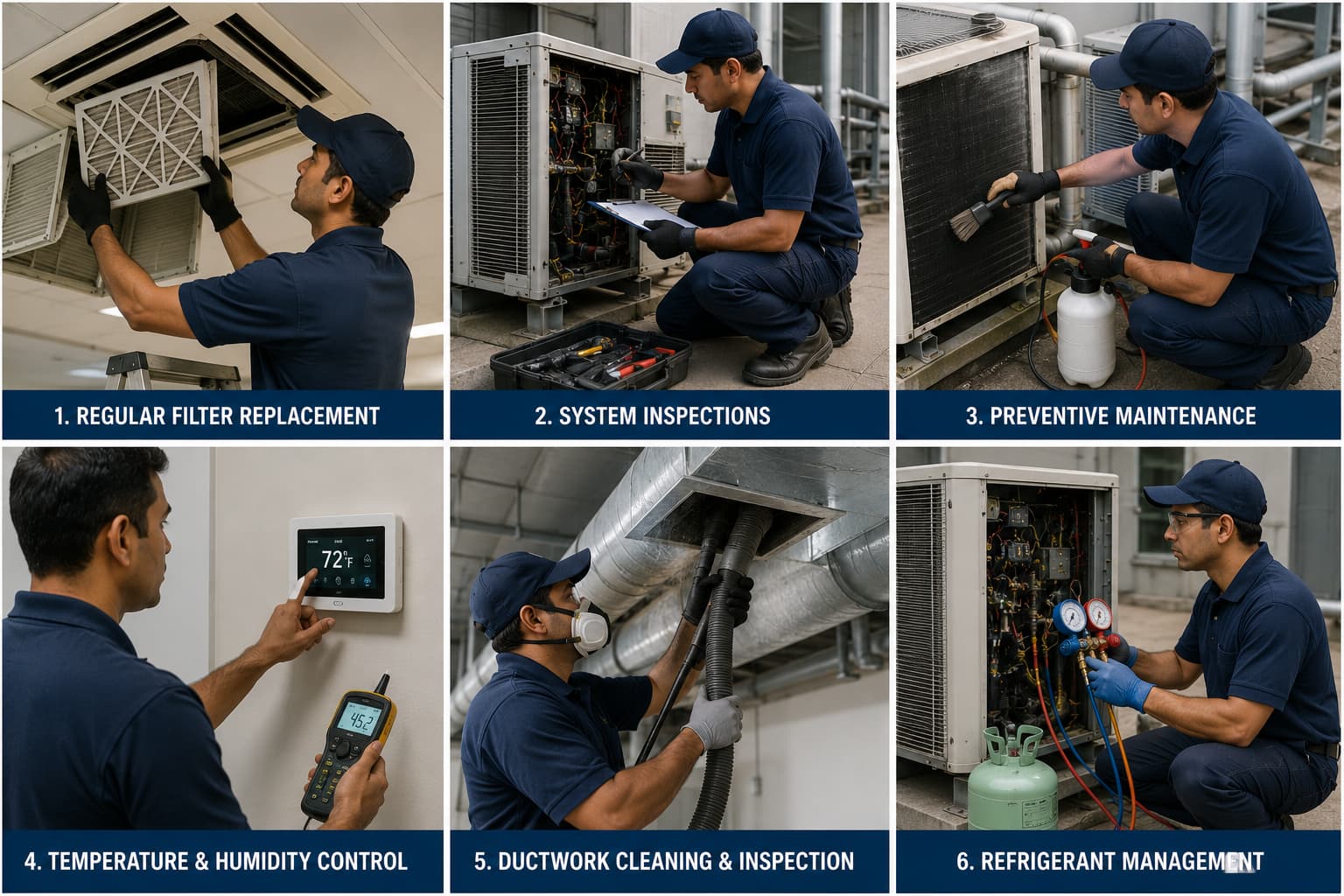
- Regular Filter Replacement: Replace air filters monthly or as specified by manufacturer. Use appropriate filter grades (MERV 8–13) depending on facility requirements and air quality standards.
- System Inspections: Conduct comprehensive inspections of HVAC equipment, ductwork, thermostats, and control systems monthly. Identify leaks, blockages, and efficiency issues.
- Preventive Maintenance: Perform routine maintenance including coil cleaning, condenser unit cleaning, refrigerant level checks, and compressor inspections to ensure optimal performance.
- Temperature & Humidity Control: Monitor and adjust temperature settings to maintain comfort levels (typically 68–72°F). Manage humidity levels (30–50%) to prevent mold growth and equipment damage.
- Ductwork Cleaning & Inspection: Conduct periodic duct cleaning to remove dust, debris, and contaminants. Inspect for leaks, damage, and proper insulation.
- Refrigerant Management: Monitor refrigerant levels, check for leaks, and perform top-ups as needed. Ensure compliance with EPA regulations regarding refrigerant handling.
- Thermostat Calibration: Test and calibrate thermostats regularly to ensure accurate temperature readings and proper system operation.
- Emergency Repair Services: Provide 24/7 emergency response for HVAC system failures, including diagnostics, repairs, and temporary solutions.
- Seasonal Preparation: Prepare HVAC systems for seasonal changes, including summer cooling system checks and winter heating system inspections.
- Energy Efficiency Optimization: Analyze system performance data to identify efficiency improvements, upgrade controllers, and implement demand-controlled ventilation.
- Indoor Air Quality (IAQ) Management: Install and maintain air quality monitoring systems, manage ventilation rates, and implement air purification measures.