Plumbing & Sanitary
Plumbing systems require regular maintenance to ensure safe water supply, proper drainage, and sanitary conditions throughout the facility.
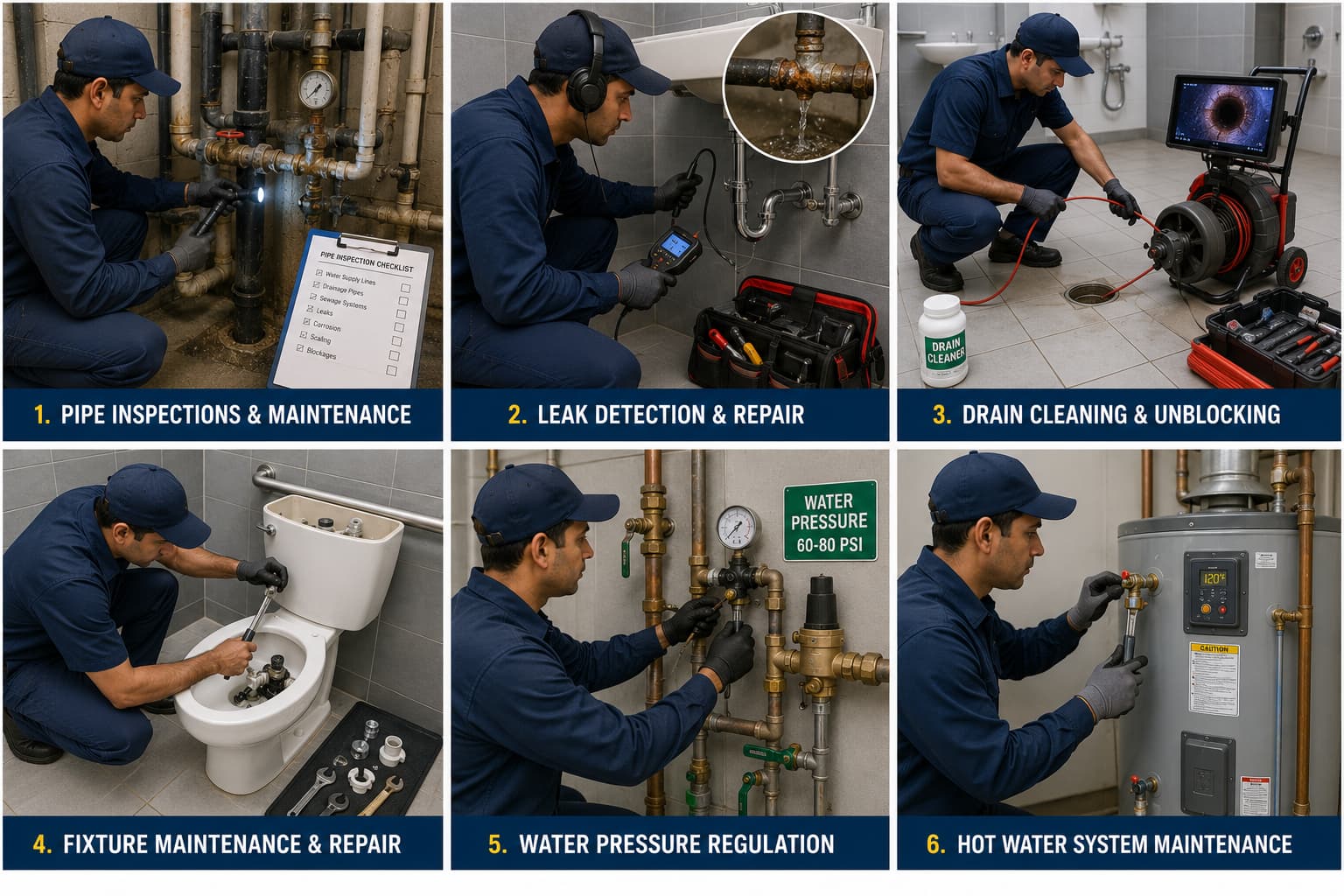
- Pipe Inspections & Maintenance: Conduct regular inspections of water supply lines, drainage pipes, and sewage systems. Identify leaks, corrosion, scaling, and blockages.
- Leak Detection & Repair: Locate and repair water leaks in pipes, fixtures, valves, and connections. Use advanced leak detection equipment when necessary.
- Drain Cleaning & Unblocking: Clear blocked drains using mechanical methods, chemical treatments, or high-pressure water jetting. Inspect drain lines with CCTV cameras.
- Fixture Maintenance & Repair: Service sinks, toilets, urinals, showers, water fountains, and other plumbing fixtures. Replace washers, gaskets, and damaged components.
- Water Pressure Regulation: Test and adjust water pressure to appropriate levels (typically 60–80 PSI). Install pressure regulators and relief valves as needed.
- Hot Water System Maintenance: Inspect water heaters, check temperature settings, flush sediment, test temperature and pressure relief valves, and manage hot water distribution.
- Backflow Prevention: Install, test, and maintain backflow prevention devices to comply with health codes and prevent contamination of water supply.
- Wastewater Treatment: Monitor septic systems or municipal connections, ensure proper discharge, and coordinate with waste management services.
- Restroom Sanitation: Coordinate daily cleaning and sanitation of restrooms, maintain supplies of soap, paper products, and sanitizers, and address sanitary issues promptly.
- Water Quality Testing: Test water quality periodically, ensure proper chlorination if applicable, and maintain records of water safety compliance.
- Plumbing Code Compliance: Ensure all plumbing work meets local codes and regulations, maintain proper permits, and document all modifications or upgrades.